Skip to content
Tree Stump Grinding Before and After: What to Expect for Your Yard in Pennsylvania
An old tree stump can make mowing difficult, interrupt landscaping plans, and leave your yard looking unfinished. Stump grinding offers a practical way to clear the obstruction without excavating the entire root system.
But what does the yard actually look like afterward?
Understanding tree stump grinding before and after helps homeowners know what to expect, from the initial grinding process to soil replacement and grass growth. The finished appearance depends on how deeply the stump is ground, how debris is handled, and whether the ground is properly restored.
What Does a Yard Look Like Before Stump Grinding?
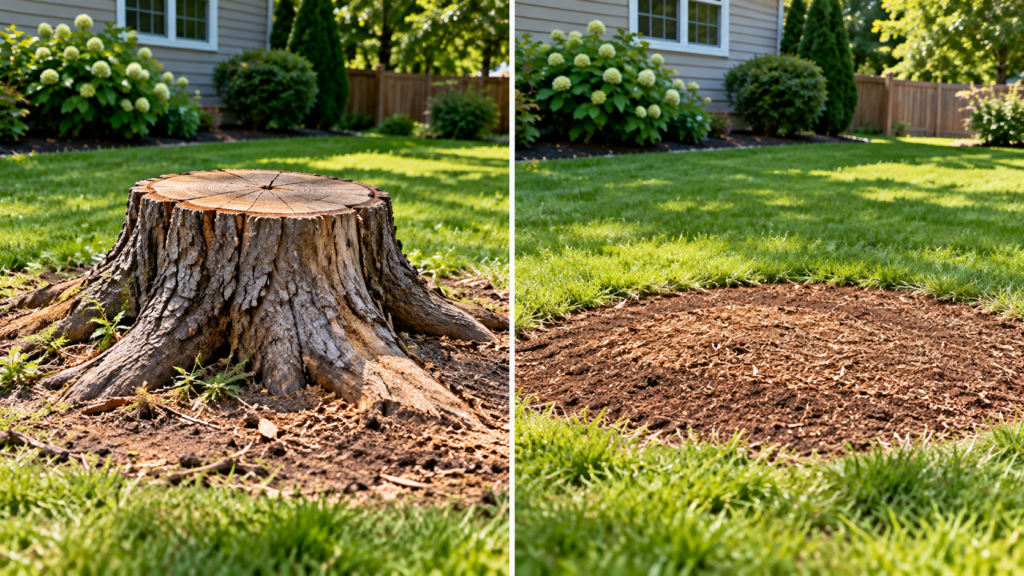
Before grinding, a leftover stump may sit several inches above the lawn, sometimes surrounded by exposed roots or uneven ground.
Besides affecting appearance, stumps can interfere with lawn equipment, create tripping hazards, and limit usable outdoor space.
Over time, decaying wood may also attract insects that feed on decomposing material.
How Does Professional Stump Grinding Work?
Stump grinding uses a specialized machine with a rotating cutting wheel to break the stump into small wood chips.
The operator gradually reduces the stump below the surrounding ground level. Grinding depth depends on the site, equipment access, and how the area will be used afterward.
Unlike full excavation, grinding typically leaves much of the underground root system in place, where it gradually decomposes.
This distinction becomes important when comparing stump grinding vs. removal, particularly if you intend to replant or install landscaping structures.
Tree Stump Grinding Before and After: What Actually Changes?
The transformation happens in stages. Immediately after grinding, the yard may look very different from the fully restored lawn homeowners expect.
Immediately After Grinding
The visible stump is gone, but the area typically contains loose wood chips, sawdust, and soil. A shallow depression or uneven surface may remain.
At this stage, the result is a cleared stump location, not necessarily a finished lawn.
After Debris Removal and Soil Leveling
Excess wood debris is cleared, and suitable topsoil can be added to bring the area closer to the surrounding ground level.
Removing excessive grindings matters because decomposing wood can temporarily reduce nitrogen availability and interfere with moisture management for new grass.
Tree stump grinding before and after photographs should ideally capture this stage rather than showing only the freshly ground stump.
After Grass Seeding and Lawn Recovery
Once the soil is prepared, the area can be reseeded. With suitable weather, watering, and soil conditions, new grass gradually covers the former stump location.
Grass establishment takes time, and the ground may require additional leveling as buried roots decompose.
What Happens to Wood Chips and Remaining Roots?
One common question about tree stump grinding before and after is whether the wood chips and roots completely disappear.
Grinding produces wood chips that can be removed or, where appropriate, reused as mulch. Leaving large quantities mixed into the future lawn’s soil can make grass establishment more difficult.
Most underground roots remain after standard grinding. As they break down naturally, the soil may gradually settle.
If you plan to build a patio, install a structure, or excavate the area, discuss your plans with the contractor before work begins.
Can You Plant Grass or Another Tree After Grinding?
Yes, but grass and trees require different preparation.
For grass, remove excess debris, replenish topsoil, level the area, and use seed suited to Pennsylvania’s growing conditions. Early fall is generally favorable for establishing cool-season lawns.
Planting another tree in exactly the same location may require more extensive root and wood removal to provide adequate planting space.
The difference between tree stump grinding before and after is most noticeable once the ground has been prepared for its intended use.
Stump Grinding vs Removal: Which Is Better?
When comparing stump grinding vs removal, the main difference is how much underground material is taken away.
| Stump Grinding | Complete Stump Excavation |
| Grinds the stump below ground level | Physically extracts the stump and major roots |
| Usually causes less disruption to the surrounding yard | Requires more excavation |
| Most underground roots remain | More of the root system is removed |
| Suitable for many lawn restoration projects | May be appropriate where excavation is necessary |
The right approach depends on stump size, accessibility, landscaping plans, and the condition of the surrounding ground.
Frequently Asked Questions
Some species can produce new shoots from surviving roots. Grinding does not guarantee that every tree species will stop resprouting.
The duration depends on stump diameter, wood hardness, surrounding obstacles, and equipment access. Multiple or particularly large stumps can require additional time.
Some settling is possible as remaining underground roots decay. Adding soil and monitoring the area can help maintain a more even surface.
Stump Grinding and Yard Restoration in Southeastern Pennsylvania
Seeing tree stump grinding before-and-after results can help you plan a cleaner, more usable yard. Professional grinding is particularly helpful when an old stump interferes with mowing, landscaping, or outdoor activities.
A Cut Above Tree Service provides stump grinding and removal services throughout Delaware, Chester, Montgomery, and Bucks counties, including the Main Line.
The family-operated, fully insured company uses professional stump-grinding equipment and includes debris cleanup, topsoil placement, and grass seeding as part of its stump removal service. Free estimates are available, so homeowners can discuss their particular yard conditions and restoration needs before scheduling work.
Whether you’re clearing an old stump or finishing a recent tree removal project, the company can help assess the next step.
Call (610) 999-5889 to discuss your property.