Skip to content
Storm-Damaged Tree Removal in Pennsylvania: When Is It Necessary?
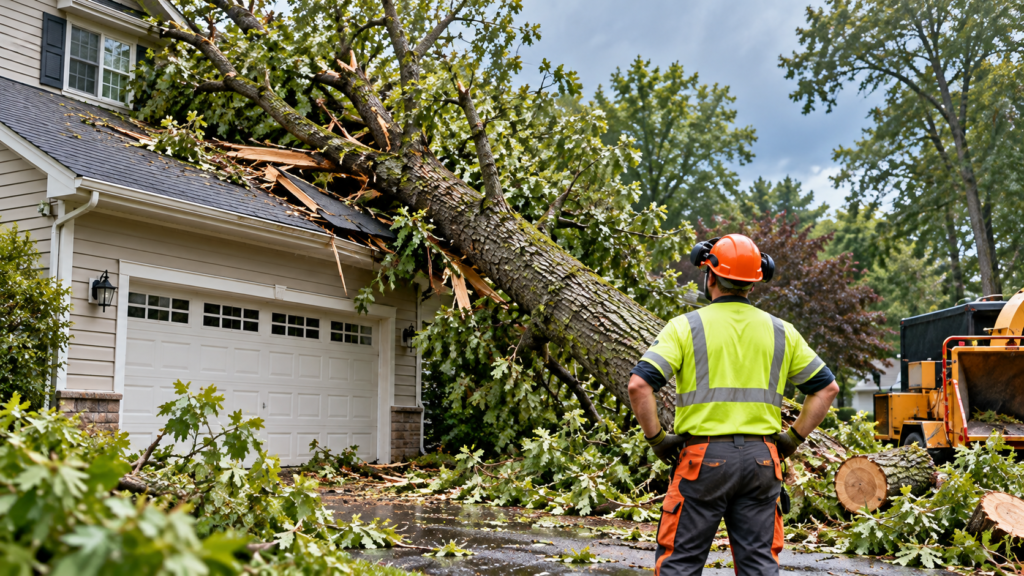
Heavy winds, thunderstorms, and winter ice can leave trees leaning, cracked, or missing major branches. While some recover with proper care, others become dangerous enough to threaten homes, vehicles, or nearby people.
Storm-damaged tree removal becomes necessary when a tree has suffered serious structural damage, lost root stability, or presents an immediate safety risk. However, not every broken branch means the entire tree must come down.
Understanding what to look for after a storm helps Pennsylvania homeowners make safer decisions and avoid unnecessary removal.
What Should You Do Immediately After a Storm?
Before inspecting your property, make sure conditions are safe. Damaged trees can remain unstable even after the weather improves.
Start with these precautions:
- Stay away from fallen power lines and nearby branches.
- Avoid walking beneath hanging or broken limbs.
- Keep children and pets away from leaning trees.
- Photograph visible damage from a safe distance.
- Contact your electric utility if a tree contacts power lines.
Never attempt to pull down a hanging branch or operate a chainsaw on a tree under tension. Damaged wood can shift unexpectedly.
For significant damage, arrange a professional assessment before beginning cleanup.
Warning Signs That a Storm-Damaged Tree May Need Removal
Knowing when storm-damaged tree removal is necessary begins with identifying structural problems.
Cracked or Split Trunks
A deep crack running through the main trunk can compromise the tree’s strength. Large splits are especially concerning when the tree stands near a house, driveway, or frequently used outdoor area.
Minor bark damage doesn’t automatically require removal, but major structural splitting needs professional evaluation.
Uprooted Trees or Exposed Roots
Strong winds can lift a tree’s root system, leaving disturbed soil, exposed roots, or a raised mound near the trunk.
When substantial root support is lost, the tree may no longer remain stable.
Sudden leaning accompanied by soil movement is particularly concerning. Avoid entering the area beneath the tree’s potential fall path.
Hanging Branches and Sudden Leaning
Partially detached branches can fall without warning. A newly leaning tree may also indicate hidden root damage.
These problems don’t always require complete removal, but they should be evaluated promptly.
Can a Storm-Damaged Tree Be Saved Through Pruning?
Yes. Some trees can recover when the trunk and root system remain sound, and damage is limited to individual branches.
Professional pruning may help by removing broken limbs, reducing hazards, and preserving healthy growth.
However, severely damaged trunks, extensive decay, or major root failure can make removal the safer option.
Penn State Extension advises against tree topping because improper cuts can encourage decay and weaken the remaining structure.
The decision should depend on the tree’s condition, remaining structure, surroundings, and likelihood of future failure.
H2: When Is Storm Damaged Tree Removal an Emergency?
Some situations require immediate professional attention rather than routine scheduling.
Examples include:
- A tree resting against a house or occupied structure.
- A large broken limb suspended above a driveway or entrance.
- A tree that has suddenly tilted toward a building.
- An uprooted tree threatening nearby property.
- A fallen tree blocking essential property access.
If electrical wires are involved, stay clear and notify the utility provider. Do not attempt to move the tree yourself.
For severe hazards, emergency tree removal after storm conditions can help prevent further injury or property damage.
H2: What Happens During Professional Storm Damage Tree Cleanup?
Professional storm damage tree cleanup generally begins with assessing hazards, access restrictions, and the stability of damaged branches or trunks.
Depending on the situation, the work may involve:
- Evaluating the damaged tree and surrounding property.
- Identifying unstable branches and affected structures.
- Planning safe removal or corrective pruning.
- Cutting and lowering hazardous sections using appropriate equipment.
- Clearing branches and other agreed-upon debris.
The exact process varies with the tree’s size, location, and damage.
Homeowners should clarify whether debris hauling, stump grinding, and site restoration are included in the estimate.
What Determines the Cost of Tree Removal After a Storm?
The cost of storm-damaged tree removal depends on the complexity of the work, not simply the height of the tree.
Important factors include tree diameter, accessibility, proximity to buildings, unstable branches, equipment requirements, and debris disposal.
Emergency work involving dangerous positioning may require additional precautions.
Instead of relying on generic online prices, request a property-specific estimate that explains the proposed work and cleanup arrangements.
Frequently Asked Questions
Is it illegal to cut down a storm-damaged tree in Pennsylvania?
Tree removal rules can depend on your municipality, property restrictions, and whether the tree is protected. Check applicable local requirements before non-emergency removal.
Should I remove a tree with only one broken branch?
Not necessarily. If the trunk and roots remain healthy, corrective pruning may be sufficient. A professional can assess the extent of the damage.
Should I document damage before cleanup?
Yes, if it is safe. Photographs and invoices may be useful for insurance purposes.
Storm Damage Tree Services in Southeastern Pennsylvania
After severe weather, deciding whether a tree needs removal, pruning, or further assessment can be difficult. Professional assistance helps homeowners address potentially dangerous conditions without unnecessarily removing trees that may be recoverable.
A Cut Above Tree Service provides storm-damaged tree removal and 24-hour emergency tree services throughout Delaware, Chester, Montgomery, and Bucks counties, including the Main Line and surrounding communities.
Based in Delaware County, this family-operated, fully insured company offers free estimates and provides tree removal, pruning, trimming, and stump grinding services.
Whether you’re dealing with hanging branches or a fallen tree obstructing your property, its services can help address the damage and plan the necessary storm damage tree cleanup.
For assistance with tree removal after storm damage in southeastern Pennsylvania, call (610) 999-5889.