Skip to content
Oak Tree Trimming in Pennsylvania: Best Time, Warning Signs & Pruning Tips
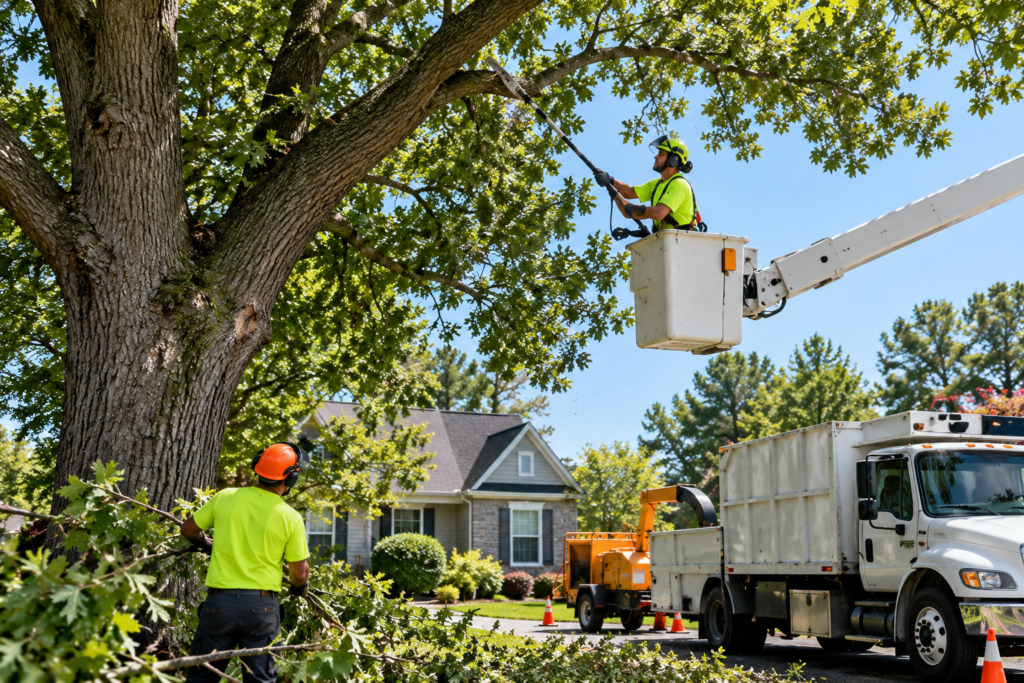
Oak trees bring shade, beauty, and character to Pennsylvania properties, but improper trimming can weaken their branches and expose them to disease. Knowing when and how to prune is essential for maintaining healthy, structurally sound trees.
The best time to trim oak trees in Pennsylvania is generally during winter dormancy, particularly December through March. Trimming during colder months helps reduce the risk of oak wilt, a fungal disease spread partly through insects attracted to fresh pruning wounds.
Here’s what homeowners should know about oak tree trimming, from recognising warning signs to choosing safe pruning techniques.
Why Do Oak Trees Need Careful Trimming?
Unlike fast-growing ornamental trees, mature oaks generally don’t require frequent cutting. Excessive branch removal can weaken the tree and disrupt its natural structure.
Proper oak tree pruning helps:
- Remove dead, damaged, or diseased branches.
- Improve clearance around roofs and driveways.
- Reduce hazards from weak branch attachments.
- Correct structural problems in younger trees.
- Preserve the canopy’s natural shape.
The goal isn’t simply to reduce the tree’s size. It’s to address specific problems while retaining as much healthy growth as possible.
When Is the Best Time for Oak Tree Trimming in Pennsylvania?
Winter and Dormant-Season Pruning
Winter is generally the best time to trim oak trees because sap-feeding insects responsible for transmitting oak wilt are less active during cold weather.
According to Penn State Extension’s oak wilt guidance, December through March is the recommended pruning period in affected Pennsylvania areas.
Dormant-season trimming also makes it easier to inspect branch structure without dense foliage obscuring the canopy.
Why Avoid Spring and Summer Pruning?
Fresh pruning cuts can attract insects carrying Bretziella fagacearum, the fungus responsible for oak wilt.
Although Penn State reported in 2025 that confirmed Pennsylvania cases remained west of the Susquehanna River, preventive practices are recommended statewide.
If you’re wondering when to prune oak tree branches, reserve routine maintenance for winter rather than spring or summer.
What About Emergency Storm Damage?
Dangerous hanging branches shouldn’t be ignored simply because it’s summer.
If emergency pruning is unavoidable during warm weather, Penn State advises promptly covering fresh oak wounds with an appropriate tree wound dressing to reduce oak wilt transmission risk.
This is a disease-prevention exception; wound dressing isn’t routinely recommended for other pruning work.
Signs Your Oak Tree Needs Trimming
Not every overgrown branch requires removal. However, several conditions can indicate that oak tree trimming deserves professional attention.
- Dead or Hanging Branches: Large dead limbs can become hazardous above walkways, roofs, or parked vehicles.
- Crossing Branches: Branches rubbing against one another may damage bark and create entry points for decay.
- Weak Branch Attachments: Cracks, crowded branch unions, or visible structural weaknesses deserve inspection.
- Low-Hanging Limbs: Branches obstructing driveways, sidewalks, or buildings may need selective reduction.
- Unusual Canopy Changes: Sudden leaf discoloration or branch dieback may indicate disease or stress rather than a simple pruning issue.
How Should Oak Trees Be Pruned?
Effective oak tree pruning requires careful cut placement and consideration of branch weight.
Use the Three-Cut Method for Large Branches
For larger limbs, a three-cut technique helps prevent bark from tearing:
- Make an undercut a short distance from the trunk.
- Cut farther out from above to remove the branch’s weight.
- Make the final cut just outside the branch collar.
The branch collar is the slightly swollen area where the branch attaches to the trunk. Preserving it helps the tree naturally seal off damaged tissue.
For detailed illustrations, refer to Penn State Extension’s pruning guide.
Preserve the Natural Canopy
Avoid unnecessary thinning or removing large portions of healthy foliage. Mature oak trees rely on their leaves to produce energy and maintain growth.
Large branches, overhead limbs, and work near utility lines should be handled by qualified tree-care professionals.
Common Oak Tree Trimming Mistakes to Avoid
Improper oak tree trimming can create problems that take years to correct.
- Tree topping: Removing major upper branches indiscriminately encourages weak regrowth.
- Flush cuts: Cutting too close to the trunk damages protective tissue.
- Leaving long stubs: Improper cuts interfere with natural wound closure.
- Lion-tailing: Removing excessive interior branches leaves foliage concentrated at branch tips.
- Excessive thinning: Removing too much live foliage can stress the tree.
- Wrong-season pruning: Unnecessary warm-weather cuts increase oak wilt exposure risks.
There is no universal trimming schedule suitable for every oak. Younger trees may benefit from developmental pruning, while mature specimens often need only occasional maintenance.
When Should an Oak Tree Be Removed Instead of Trimmed?
Pruning cannot resolve severe structural damage.
Removal may become necessary when a tree has extensive trunk decay, major root instability, significant cracking, or structural problems that cannot be adequately corrected.
A professional assessment can help determine whether pruning, monitoring, or complete removal is appropriate.
Professional Oak Tree Trimming in Chester and Delaware Counties, PA
Proper oak tree trimming can help preserve the health and structure of mature trees while reducing risks to your property. Whether you’re concerned about overhanging limbs, storm damage, or seasonal maintenance, knowing when professional care is needed makes a difference.
A Cut Above Tree Service helps homeowners across Chester, Delaware, Montgomery, and Bucks counties, including the Main Line, maintain safer, healthier landscapes. As a family-operated business based in Delaware County, we offer free estimates and services ranging from routine pruning to hazardous tree removal.
If your oak tree has overgrown branches or shows signs of structural damage, our team can assess its condition and recommend suitable next steps.
Call (610) 999-5889 to discuss your tree-care needs and request a free estimate.